


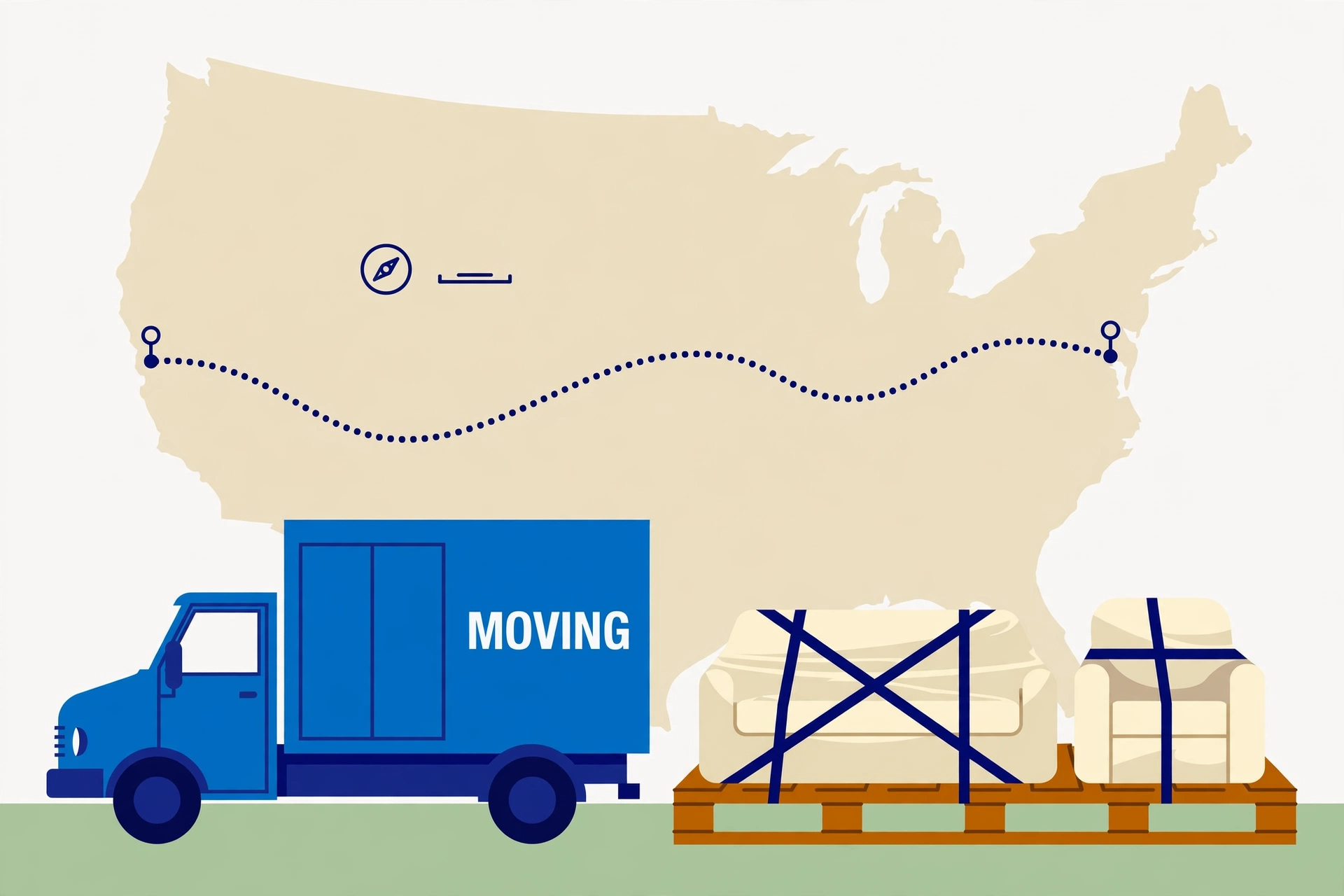
You just landed a new job two states away, or you sold a dresser to someone across the map, and now one heavy question is staring you down: how do you actually get that couch, dining set, or armoire from here to there without wrecking it or your budget?
Furniture is the hardest thing most people ever ship. It is heavy, bulky, oddly shaped, and expensive to replace. But there is a right method for every situation, and once you know your options, the whole thing gets a lot less intimidating.
This guide compares the four real ways to ship furniture across the country, breaks down what drives the cost, shows you how to prep pieces so they arrive intact, and answers the questions everyone asks first. Freight prices move with fuel costs and seasons, so treat any dollar figure here as guidance and always get a current quote for your exact shipment.
Your 4 Main Options for Shipping Furniture
1. Parcel carriers for small pieces.
If it fits in a box and stays under roughly 150 lbs and 165 inches in combined length and girth, UPS or FedEx Ground can take it. Think disassembled side tables, small chairs, shelving units, and lamps. This is usually the cheapest per-piece option when it fits, but most full-size furniture does not qualify.
2. LTL freight for single pieces and small loads.
LTL stands for less-than-truckload. Your furniture shares trailer space with other shipments heading the same direction, and you only pay for the space you use. This is the workhorse method for shipping one sofa, a dining set, or a few pieces cross-country. The piece typically travels blanket-wrapped on a pallet, and you can add liftgate service (a truck-mounted lift for locations without a loading dock) plus residential delivery when the pickup or drop-off is a home.
3. White glove delivery for valuable or delicate pieces.
White glove means the carrier handles the heavy lifting, literally. Pickup, blanket-wrapped transport, delivery into the room of your choice, and often debris removal. It costs more than standard freight, but for antiques, designer pieces, or anything you could never replace, the extra care earns its keep.
4. Moving containers for a whole room or more.
If you are moving enough furniture to fill a room, a portable moving container can beat per-piece freight pricing. You load it, the company transports it, and you unload at the destination. This makes the most sense when furniture shipping is part of a bigger move rather than a one-off shipment.
Not sure which lane fits your shipment? Our shipping options page walks through the carriers we compare for customers every day.
| Method | Best for | Typical transit | Cost signal |
|---|---|---|---|
| Parcel (UPS/FedEx Ground) | Small, disassembled pieces that fit carrier limits | 2 to 6 business days | Cheapest when it fits |
| LTL freight | One large piece or a few pieces | 5 to 10 business days | Mid hundreds coast to coast, before accessorials |
| White glove | Antiques, designer pieces, irreplaceables | 7 to 14 business days | Highest per-piece cost |
| Moving containers | A full room or more | 7 to 14 business days | Competitive for large loads |
How Much Does It Cost to Ship Furniture Across the Country?
There is no single answer, because every quote comes down to the same five factors:
Weight and dimensions. Freight is priced by how much space the piece takes and how dense it is. A solid oak dresser costs more than a flat-pack bookshelf with the same footprint.
Distance. A few hundred miles is affordable. Coast to coast is the premium lane.
Service level. Curbside drop-off is cheapest. Inside delivery, stairs, and white glove handling each add to the total.
Timing. Freight prices rise with fuel costs and during peak moving season, roughly May through September. Flexible dates in the off season can save real money.
Access at both ends. Narrow streets, walk-up apartments, and rural addresses add accessorial charges. Mention stairs, long carries, and tight turns when quoting so there is no surprise on delivery day.
A single chair shipped regionally might cost very little, while a full living room set going cross-country lands in the high hundreds or more. For a fuller breakdown of how carriers price shipments, see our guide on how much it costs to ship a package.
Cost to Ship a Couch Cross-Country
The couch is the question everyone asks, and it sits in the sweet spot of furniture shipping: too big for parcel, perfect for LTL freight. A standard sofa on a pallet going coast to coast usually lands in the mid hundreds for base freight, with liftgate and residential delivery often adding a few hundred more on top. A regional move costs noticeably less, and white glove service costs more. Because fuel surcharges and seasonal demand shift these numbers constantly, get at least two written quotes before you commit.
Freight Paperwork You Will Actually See
Booking LTL freight comes with a little paperwork, and understanding three terms will keep you from getting burned:
Freight class. Carriers group shipments into classes based on density, stowability, handling, and liability. Denser, sturdy, easy-to-handle freight costs less to move. If your piece is quoted at the wrong class, you can face a reclassification fee after pickup, so confirm the class on your quote before booking.
Declared value. This is the value you tell the carrier your shipment is worth, and it sets the ceiling for any damage claim. Basic carrier liability is usually included but covers only pennies on the dollar, often calculated by weight. For anything valuable, declare full replacement value and confirm the coverage terms in writing.
Bill of lading. Think of this as the receipt and contract for the move. It lists what is being shipped, the service level, and the declared value. Inspect your piece at delivery, note any damage on the bill of lading before you sign, and keep your copy. Undocumented damage is nearly impossible to claim.
How to Prep Furniture So It Arrives Undamaged
Nearly all transit damage comes down to skipped prep. Here is the process freight veterans swear by:
Disassemble first. Remove legs, shelves, glass panels, and hardware. Bag every screw and bolt in a labeled bag and tape it to the piece it belongs to. Disassembly shrinks the footprint, which lowers both parcel dimensional weight and freight class, and it stops joints and legs from snapping under road vibration.
Blanket wrap, then stretch wrap. Cover finished surfaces with moving blankets or furniture pads first, then hold everything in place with stretch wrap. Add cardboard or foam corner protectors on every edge and corner, since those take the most abuse in transit.
Treat wood and upholstery differently. Padding prevents scratches and dents on wood. On upholstery, add a plastic or shrink-wrap layer over the padding to guard against moisture and grime from shared trailer space.
Palletize the big stuff. Large pieces shipping LTL should be strapped to a pallet. It lets forklifts move the piece safely and keeps other freight from crushing it.
Box the small stuff separately. Lamps, decor, glass shelves, and detached hardware go in sturdy boxes with plenty of cushioning. For fragile pieces that need real protection, our packing services handle custom crating every day.
Photograph everything. Take dated photos of each piece from multiple angles before wrapping. Clear before-and-after photos turn a messy claim into a straightforward one.
Label clearly. Mark boxes with the destination room and contents, and add Fragile and This Side Up where they apply.
Pre-Shipment Checklist
Run through this before anything leaves your home:
- Measure doorways, hallways, and elevators at both locations
- Disassemble pieces and bag all hardware with labels
- Blanket wrap, corner protect, and stretch wrap every surface
- Palletize and strap large pieces for freight
- Photograph every piece from multiple angles, with dates
- Confirm pickup and delivery access: stairs, elevators, parking, liftgate need
- Verify freight class, declared value, and accessorials on the written quote
- Get the delivery window in writing
- Purchase adequate coverage for full replacement value
- Keep copies of the bill of lading, quote, and tracking numbers
Frequently Asked Questions
What is the cheapest way to ship furniture across the country? For a single piece or a few pieces, LTL freight is usually the cheapest route because you pay only for the space you use. Small, sturdy items that fit parcel limits can go even cheaper via UPS or FedEx Ground. And in every scenario, disassembling the piece to shrink its footprint lowers the price.
How much does it cost to ship a couch across the country? It depends on distance, size, and service level. A standard sofa shipped LTL freight coast to coast usually lands in the mid hundreds for base freight, with liftgate and residential delivery often adding more. Regional moves cost less, white glove costs more. Get at least two written quotes, since fuel prices and seasons shift rates.
Can USPS ship furniture? USPS is rarely practical for furniture. Its size limits (up to 108 inches long and 130 inches combined length and girth) and 70 lb weight cap rule out almost everything except small disassembled parts. UPS and FedEx Ground handle larger parcels, and both run freight services for the big stuff.
Should I disassemble furniture before shipping? Yes, whenever possible. Disassembly reduces the packed size, which directly lowers the cost, and it prevents stress damage to joints, legs, and glass during transit. Keep all hardware in labeled bags taped to the corresponding piece, and snap a photo of the assembly before you take it apart.
How long does it take to ship furniture across the country? Plan on 5 to 10 business days for LTL freight, 2 to 6 business days for parcel shipments, and 7 to 14 business days for white glove delivery or moving containers. Peak season and rural destinations can stretch these windows, so book with a cushion if your timing matters.
Does furniture shipping include insurance? Basic carrier liability is usually included but covers only a fraction of the item's value, often calculated by weight. For anything you would hate to replace at your own expense, buy additional declared value coverage or third-party insurance for the full replacement cost. Learn what real protection looks like on our shipping protection page.
Ship It Right the First Time
Shipping furniture across the country comes down to picking the right method for your load, prepping every piece properly, and reading the paperwork before you sign. Get those three right and your furniture arrives the way it left.
Bring your smaller pieces to Print N Ship 4u in Katy, TX and we will pack them professionally, compare carriers for the best rate, and set up full coverage. For larger freight shipments, we will help you prep and point you to the right option. Call us at (281) 375-9714 or stop by our contact page and let us take it from here.